Stray voltage in dairy barns: the role of concrete reinforcement
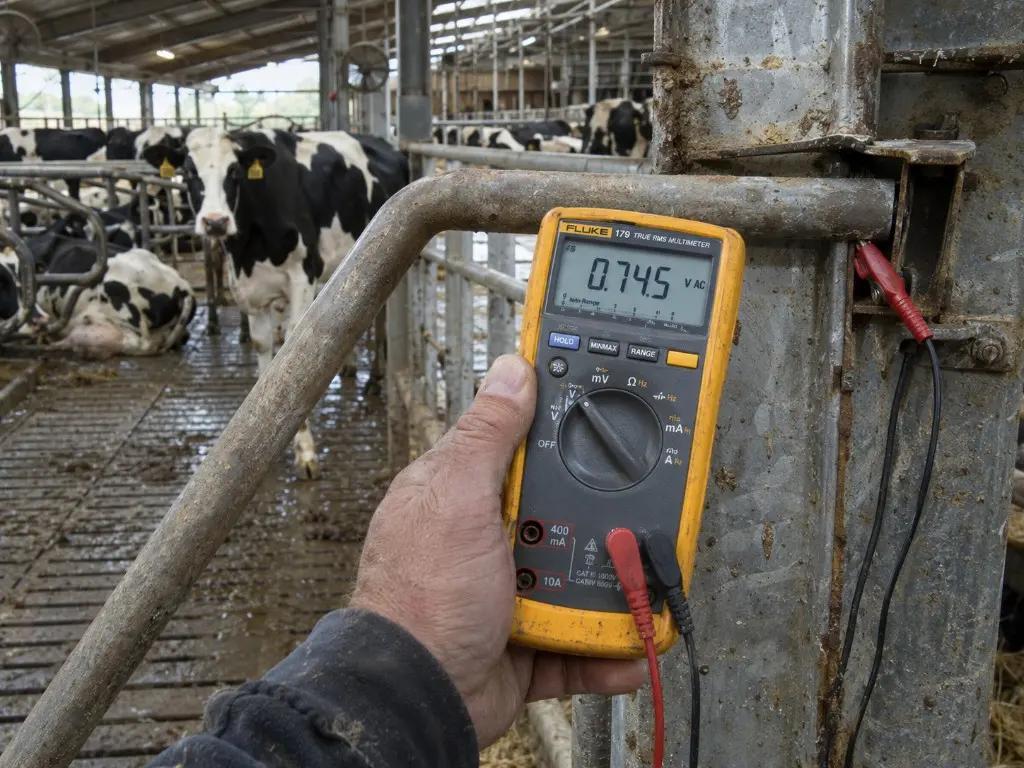
Explore ILVO research on stray voltage in dairy barns and the role of non-conductive GFRP reinforcement in precast concrete livestock flooring.
From political discussions in France to scientific research in Belgium, stray voltage in livestock farming is receiving increasing attention. The electrical properties of construction materials, including concrete reinforcement, deserve consideration in the design of modern agricultural buildings.
Stray currents in livestock farming reach the French Senate
On 12 February 2025, the issue of stray currents in livestock farming was discussed in the French Senate. Several senators highlighted the potential consequences of unwanted electrical currents for animal welfare and the economic performance of agricultural businesses.
The senators advocated preventive electrical assessments for livestock farms located near future energy infrastructure, including high-voltage power lines, wind turbines and photovoltaic installations.
This parliamentary debate highlights the growing importance of electrical safety in the agricultural sector. However, it does not establish that every type of energy infrastructure necessarily causes stray current problems.
The impact of stray voltage on dairy cattle
Stray currents occur when electrical current flows outside its intended circuit. Unwanted voltage differences can develop across metallic structures, pipelines, concrete reinforcement and wet floors.
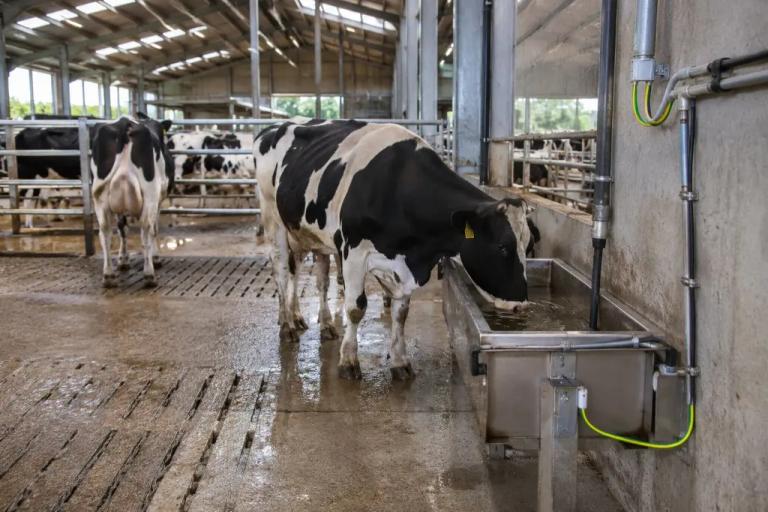
When a cow simultaneously comes into contact with a metal drinking trough and a concrete slatted floor, a voltage difference may cause electrical current to pass through the animal's body.
Potential signs of exposure to unwanted contact voltages include:
- Restlessness during milking
- Avoidance of drinking troughs and resting areas
- Reduced feed and water intake
- Disrupted milk let-down
- Unusual behavioural patterns
As these symptoms may also have other causes, a professional electrical assessment is essential.
Measuring stray voltage in dairy barns: ILVO research
In Belgium, the Flanders Research Institute for Agriculture, Fisheries and Food (ILVO), in collaboration with several agricultural industry partners, has conducted research into the detection and prevention of stray voltage in dairy barns.
As part of this research project, a standardised measurement protocol was developed and validated under practical conditions.
The research highlights the importance of systematically assessing various components of livestock facilities:
- Electrical grounding and equipotential bonding
- Metal drinking troughs and livestock barriers
- Milking systems and electrical equipment
- Voltage differences between contact points
- Electrical installations and their surroundings
Stray voltage problems can also be intermittent, occurring during the operation of specific electrical equipment or under changing moisture conditions.
Properly designed electrical installations and professional measurements are therefore essential for identifying and mitigating potential problems.
The role of steel reinforcement in concrete slatted floors
Precast concrete is widely used throughout the agricultural sector. Concrete slatted floors, precast floor panels, concrete walls and slurry storage structures are essential components of modern livestock facilities.
Traditionally, these concrete elements are reinforced with steel reinforcement. However, steel is electrically conductive and, depending on the electrical design, may form part of the pathway through which unwanted electrical currents travel.
Conversely, correctly bonded steel reinforcement can contribute to equipotential bonding and help reduce voltage differences.
The electrical properties of concrete reinforcement must therefore be considered as part of the overall design of agricultural buildings.
GFRP reinforcement as a non-conductive alternative for precast concrete
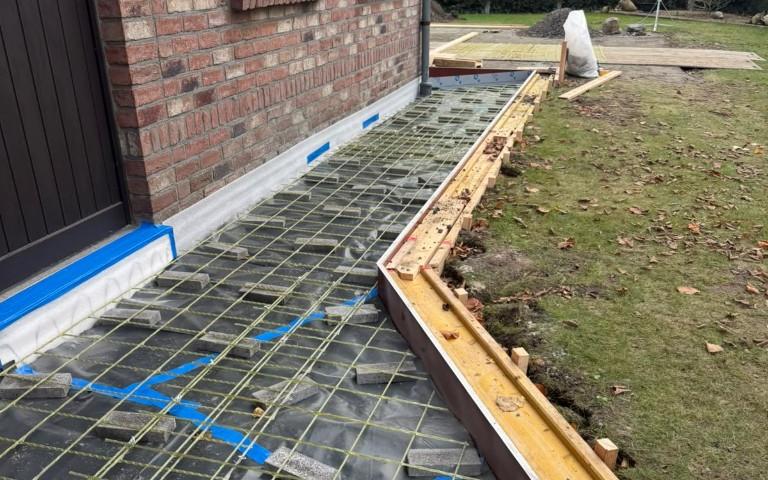
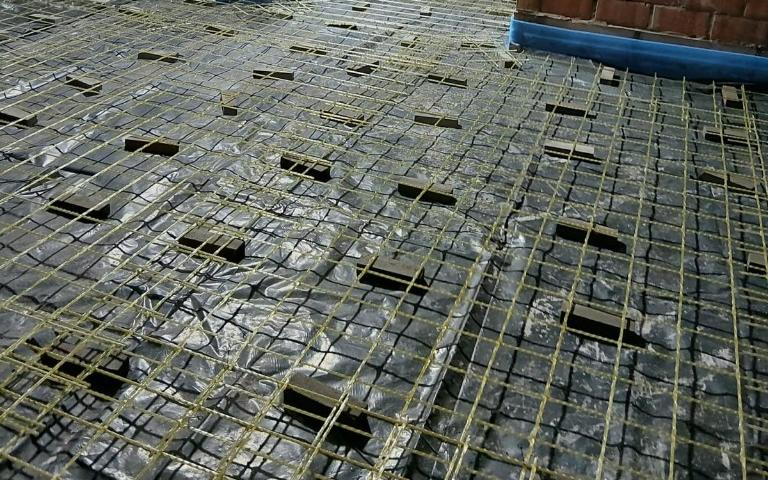
Glass Fiber Reinforced Polymer (GFRP) reinforcement offers an alternative to traditional steel reinforcement.
Unlike steel, GFRP reinforcement has electrically insulating properties. Consequently, the structural reinforcement itself does not create a metallic conductive pathway for stray currents within the concrete structure.
For precast concrete manufacturers, GFRP reinforcement offers several material-related advantages:
- Electrically insulating properties
- No steel corrosion
- Low weight
- Easier handling of reinforcement mesh
- Potential for durable applications in aggressive agricultural environments
These properties make glass fibre reinforcement an interesting material for the development of precast concrete slats, livestock flooring, precast floor panels and other agricultural concrete elements, subject to structural validation for each intended application.
Stray voltage prevention starts with building design
Mitigating stray voltage in livestock farming requires an integrated approach that considers electrical installations, grounding, equipotential bonding and construction materials together.
GFRP reinforcement does not replace proper electrical grounding or equipotential bonding. The use of non-conductive concrete reinforcement may require a separate equipotential bonding system.
At FIBR, we believe that the next generation of precast concrete products for agriculture should consider not only mechanical performance and corrosion resistance, but also the electrical properties of the construction materials used.
With electrically insulating and corrosion-resistant glass fibre reinforcement, FIBR offers an alternative to traditional steel reinforcement, enabling precast concrete manufacturers to explore new opportunities for durable agricultural construction.